

STEM Learning
STEM Education: Transforming Futures
In today’s world, STEM education has become an essential component. Children will continually face new issues and challenges in ever-evolving technology-driven developments. Things students learn today will become obsolete tomorrow. It is essential to prepare them to learn and apply core STEM concepts and develop the ability to solve real-world problems themselves. Its new revolution that is taking shape world over.
REAP’s mission is to make quality STEM education accessible to the most disadvantaged children from the Govt. schools and low-income schools located in the slums, tribal and rural areas by setting up state-of-art STEM Labs, Science and Computer Labs, Training of teachers and deployment of qualified technical personnel to facilitate STEM learning.
REAP has reached 20,000+ students in STEM education and collaborating with Schools as well as Educational Institutions to make an education movement, building confidence among the disadvantaged communities as well as girls to develop STEM career pathways.
What students learn?
Our curriculum structure is divided mainly into five major intervention components:
1. Curriculum-Linked Science & Mathematics
→ Unit 1, Unit-2, Unit 3 and Unit 4 reinforcement
2. Robotics, Coding and AI
→ Electronics, sensors, coding, AI and automation
3. Experiential & DIY STEM
→ Experiments, models and engineering challenges
4. Student Innovation Projects
→ Design-thinking and problem-solving
5. STEM Exhibition & Assessment
→ Demonstration, recognition, baseline/endline measurement
Our STEM programme follows a Curriculum → Explore → Experiment → Design → Build → Test → Improve → Present model.
Students progressively learn the knowledge and skills:
Scientific Knowledge → Scientific Inquiry → Technological Skills → Engineering Design → Innovation → Communication
Our Programs
Robotics
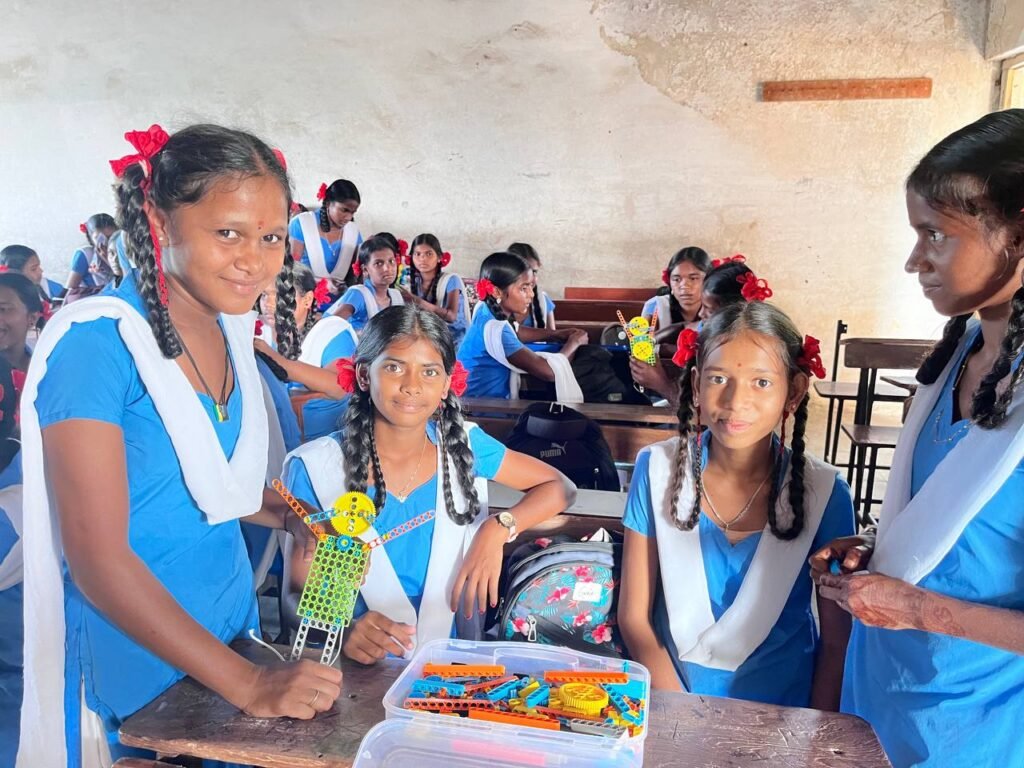
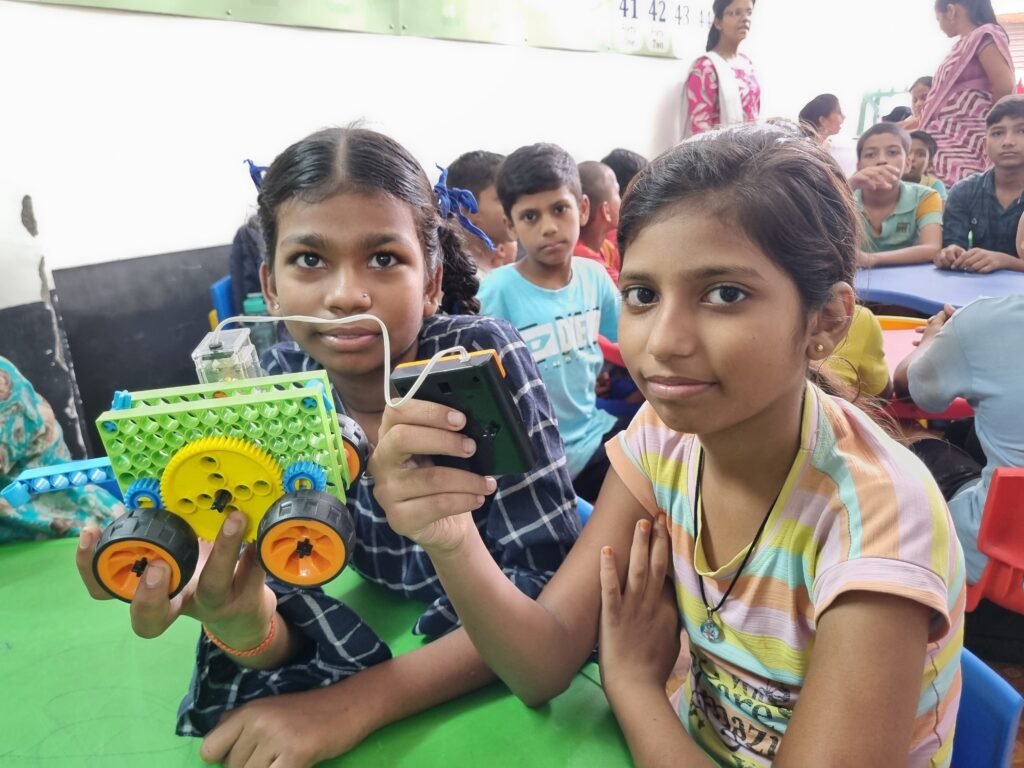
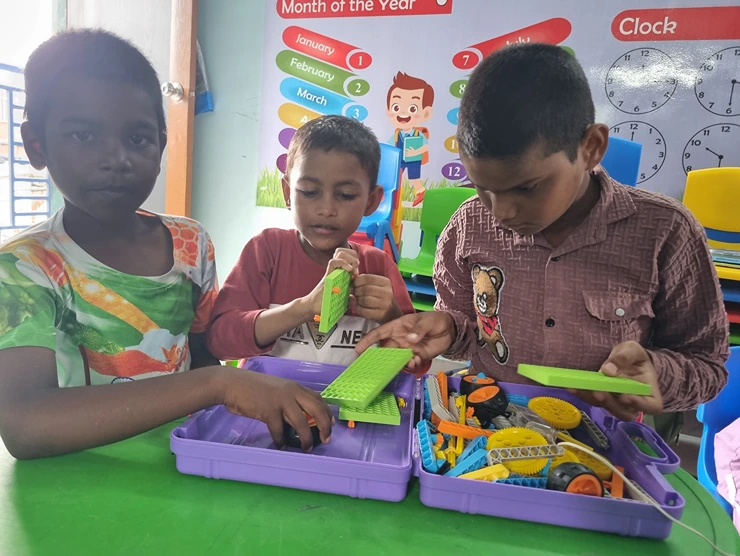
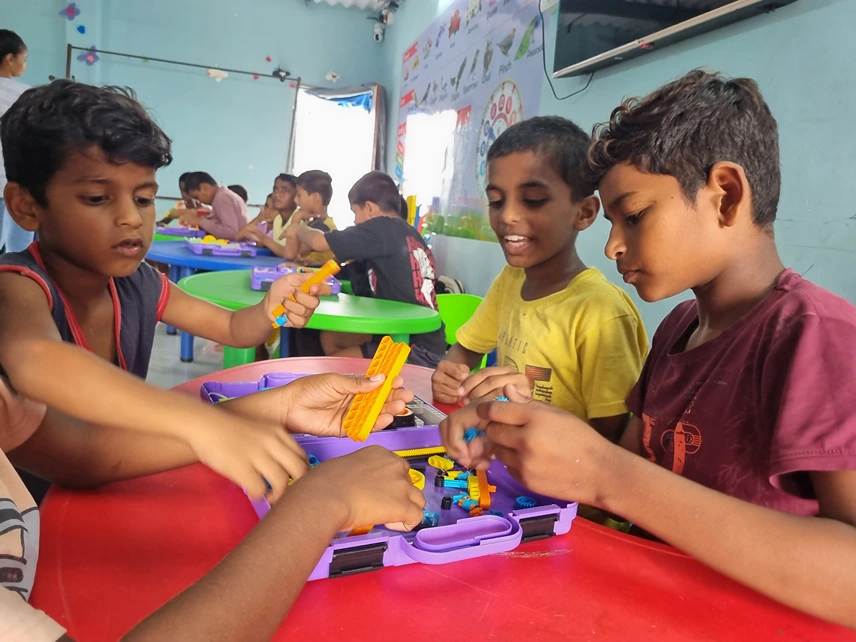
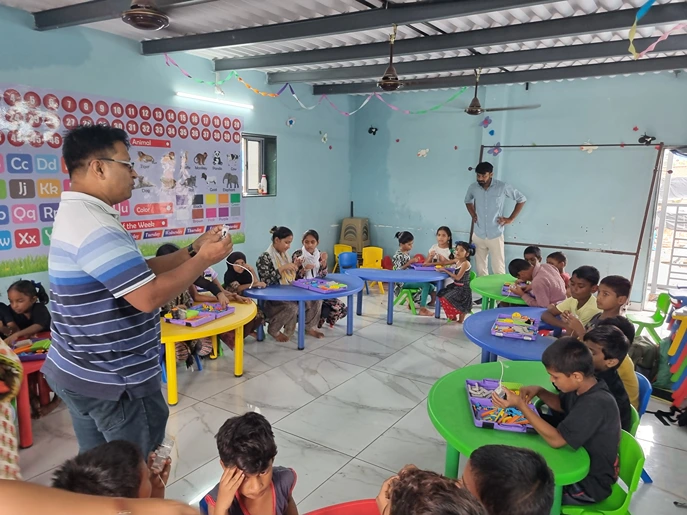
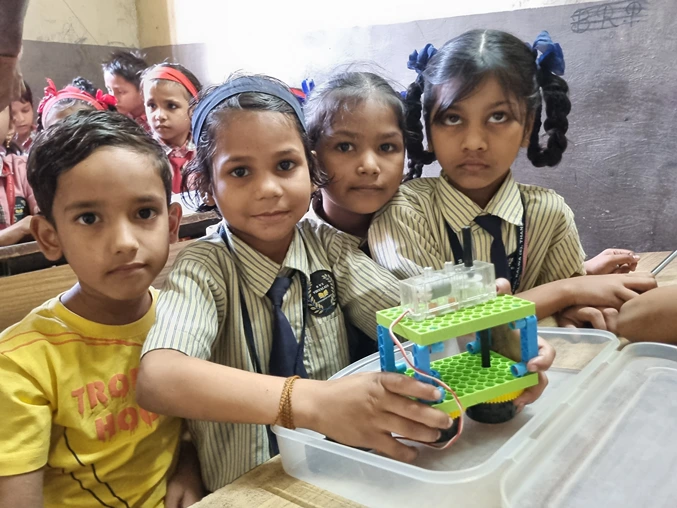
Our Robotics programme introduces children to the exciting world of mechanical design and engineering. Using age-appropriate robotics kits, students learn how to build working models such as gear-changing cars, cranes, marble runs, and sensor-based vehicles. These activities help children understand fundamental concepts like gears, pulleys, levers, and motion through experiential learning. The Robotics sessions also encourage teamwork, logical thinking, and design innovation. Children don’t just build models; they learn to observe, question, and apply scientific principles in real time.
Coding
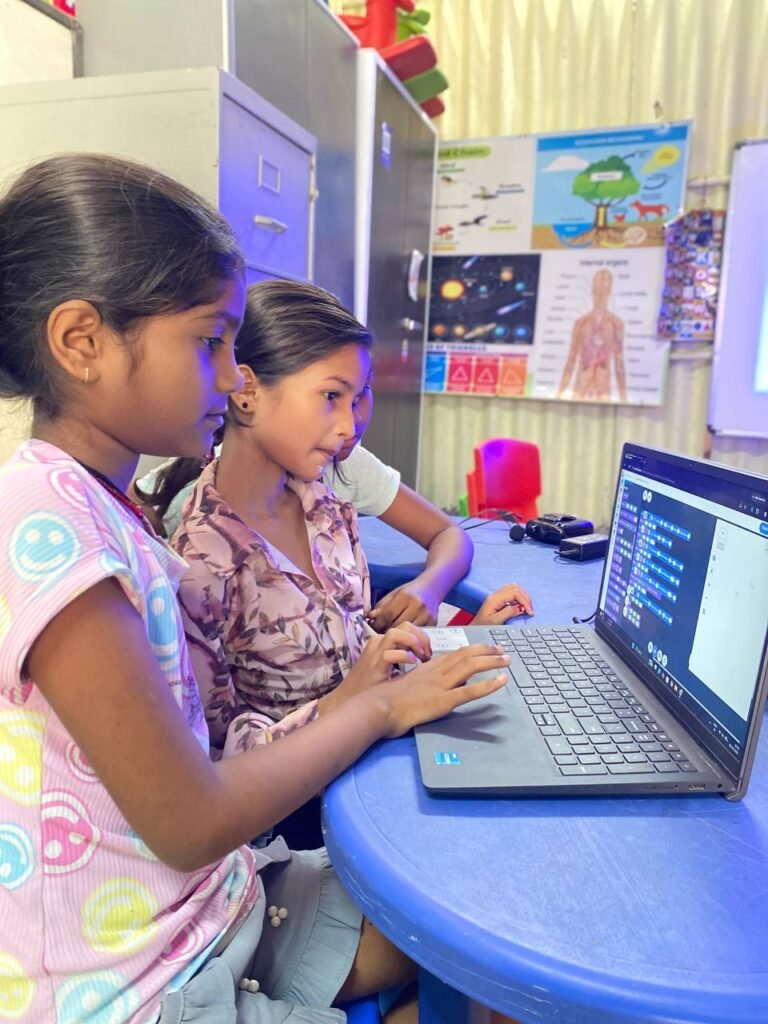
Our Coding module focuses on developing digital literacy and computational thinking among children. Starting with beginner-friendly platforms like Scratch, students learn the basics of coding by creating simple games, animations, and interactive stories. They explore concepts such as algorithms, sequencing, loops, and conditionals. The aim is to shift children from being passive users of technology to becoming active creators and problem solvers. Even those with no prior exposure to computers quickly build confidence and enjoy experimenting with code.
Science Projects
and Experiments
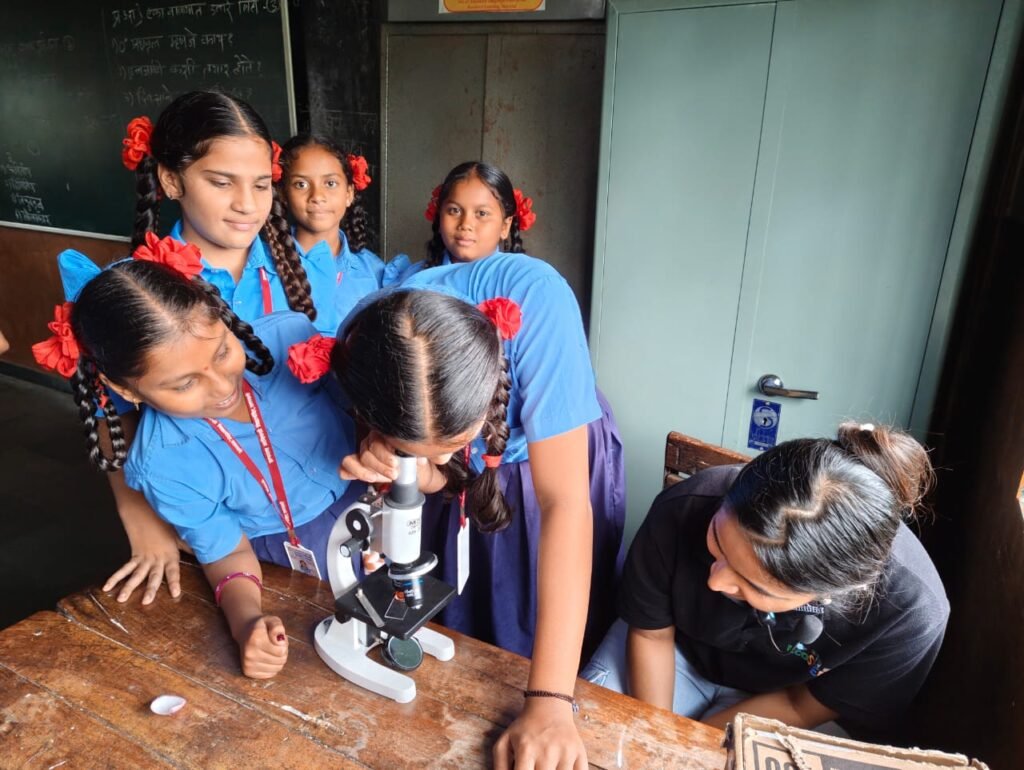
To make science relatable and exciting, we conduct a variety of hands-on science experiments and DIY projects. These activities allow students to explore scientific concepts like density, air pressure, filtration, and chemical reactions in a fun and engaging way. Children participate in simple experiments such as making a homemade water filter, observing dancing raisins in soda water, or creating their own lava lamps. These projects not only bring textbook science to life but also encourage curiosity, observation, and inquiry-based learning
ANNUAL STEM EXHIBITION AND INNOVATION CHALLANGE
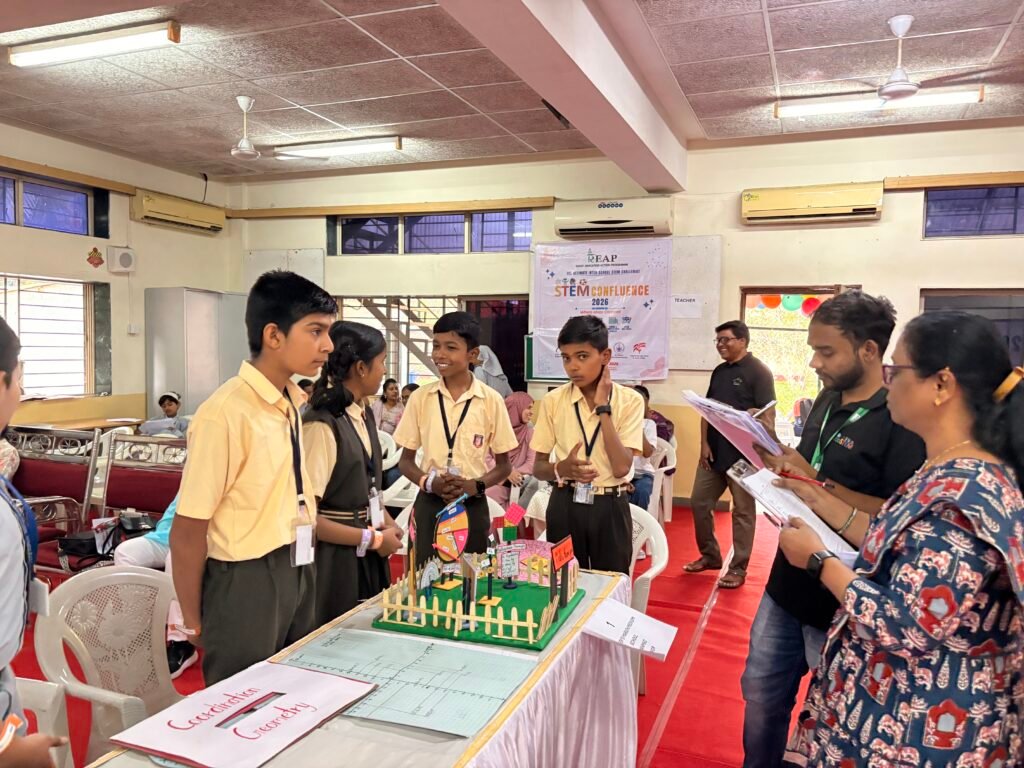
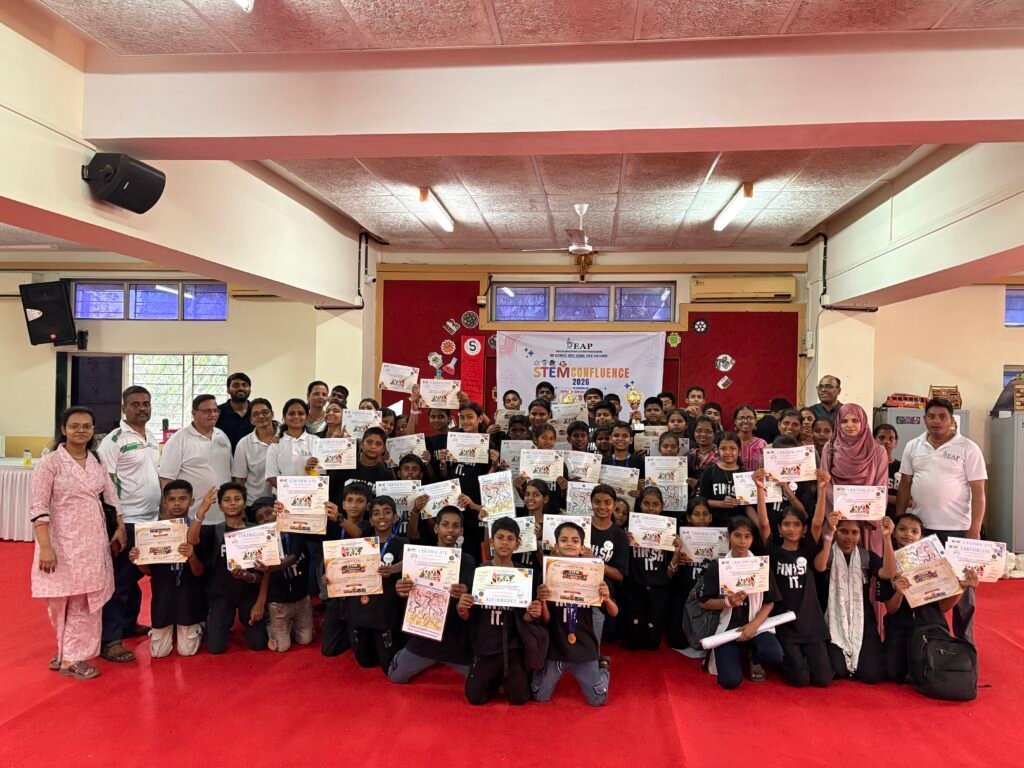
Annual STEM (Science, Technology, Engineering, and Mathematics) exhibitions are facilitated by REAP with participating schools to showcase student innovations, hands-on experiments, and tech projects. They highlight real-world problem-solving, robotics, and sustainable technologies.
Key Features of Annual STEM Challenges
• Student Projects: Displays ranging from IoT devices and AI applications to renewable energy models.
• Interactive Demos: Hands-on workshops, coding challenges, and science-detective activities.
• Challenges/Competitions: Awards are given to best Student projects on following categories:
1. Best Science Experiment
2. Best Robotics Project
3. Best DIY Innovation
4. Best Engineering Design
5. Best Mathematical Application
6. Best Girls’ STEM Project
7. Most Innovative Project
Students not merely display models, but they explain the scientific principle, demonstrate the model and answer questions.
Program Highlights
- Hands-On Learning: Our STEM program is designed to be interactive and engaging, with a focus on project-based learning. Students work on real-world challenges and see the immediate impact of their efforts.
- Expert Instructors: Our instructors are passionate professionals with experience in STEM fields. They are dedicated to making complex concepts accessible and exciting for young learners.
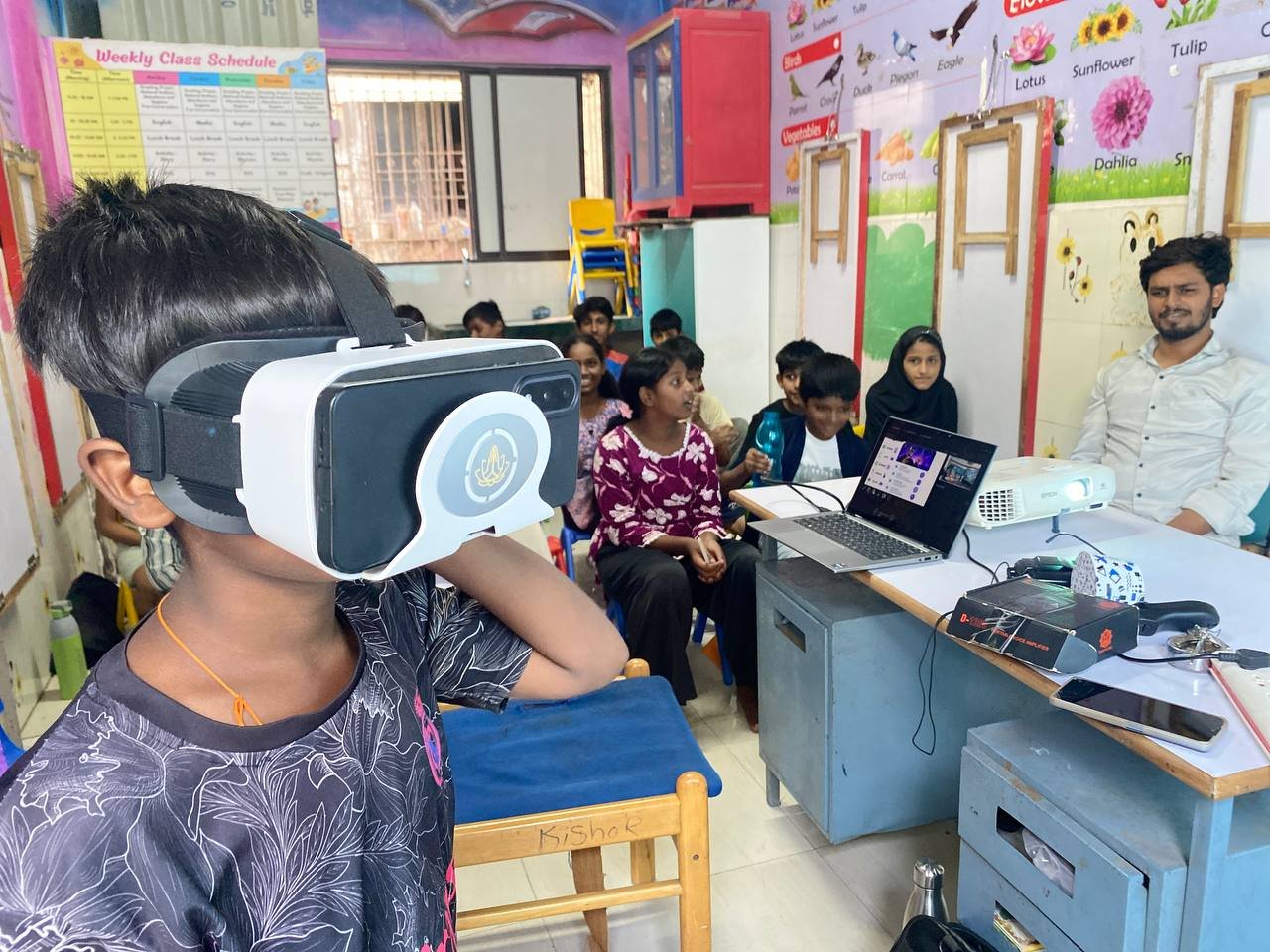
- Community Integration: We bring STEM education directly to slum communities, ensuring that even the most underserved children have access to these vital learning opportunities.
- Future-Ready Skills: By focusing on Robotics, Coding, and AI, we equip children with skills that are in high demand, setting them up for future academic and career success.